RESEARCHING AND WRITING THE HISTORY OF YOUR SCHOOL
An Educator’s Guide
Most students are curious about the young people who walked their corridors many decades ago. Did they study the same subjects as we do today? Play the same sports? What kind of music did they dance to at their prom? What were the school rules then, or the details of that championship season that's celebrated with a banner in the gym? What became of the students in the hall photographs, with their old timey clothes and strange hairstyles?
Fortunately for student researchers, school records and memorabilia are regularly preserved, by the school district and the campus, and by the individual graduates as well. All you have to do is look in the right places and your tasks as school historians can be remarkably fruitful.
Off-air recordings and downloaded files can be used free-of-charge beginning November 1, 2026 through November 30, 2029.
This guide for educators was authored by Syd Golston, a much honored educator, mentor and the former president of the National Council for the Social Studies.

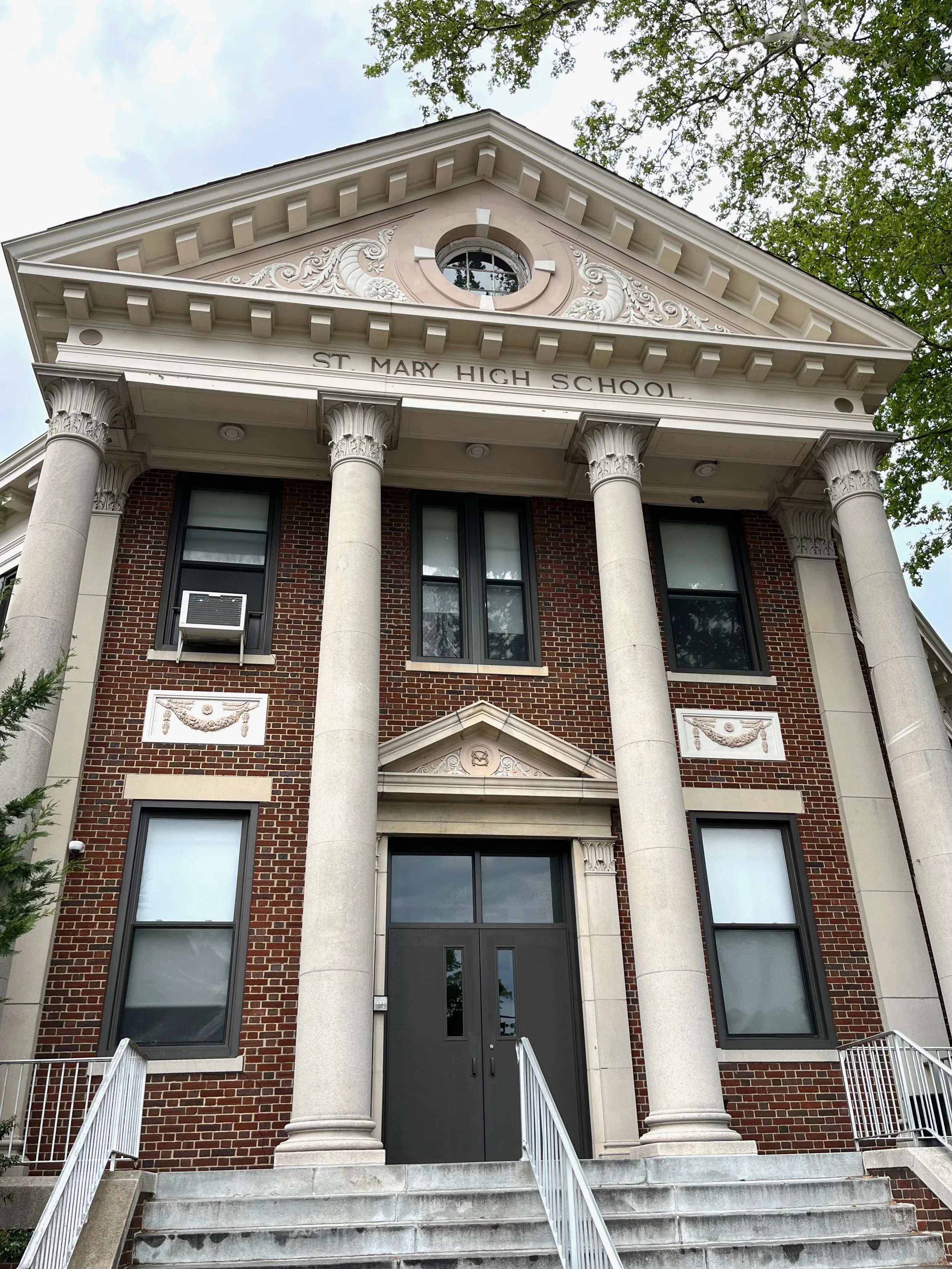
Photo courtesy Harrison Keely, Wikimedia Commons
How do you arrange interview excerpts to tell a story? (click to see video)
START WITH A TITLE COMPANY
Title companies trace the past ownership ("title") and use of the parcels of land in your community, so that land can be accurately bought, sold, taxed, and provided with utilities. What was your campus before it was a school, and to whom did the land belong? A representative of the title company might come to your classroom and show you the records of the "plat" (section of land) in official title books; you will learn each of the owners of the land since ownership has been recorded. Depending on region of the country, these records can go back almost four centuries in the northeast - or just two or three generations in the more recent settlements of the west.
Title agents tend to be interested in history themselves, since it's part of their jobs to look up the past. They may even become part of your school history project, opening doors for you at City Hall and finding information you didn't even imagine was available to you. One example: Stewart Title Company in Phoenix, Arizona discovered aerial photographs of the neighborhood surrounding our campus from the 1920's, the 1940's, and the 1970's.
CONSULT THE SCHOOL DISTRICT OFFICE
When did your school district decide to open your school? The Superintendent's Office may be able to show you School Board records from the year when the School Board, the elected representatives of the citizens in your community, voted to create a new campus. There were inevitably many decisions to make: the land to be purchased for a site, the amount of money that could be allocated for the buildings, whether a bond election would be necessary to pay for the new school, or the role of the new campus in the educational scheme of the district (special services or departments, etc.). Records may show when the first principal was named, and who was on the planning team for your school before its first bricks were ever laid. Every new school expresses the vision of educators, parents, tax payers, and leaders in your community years ago, and Board meeting minutes will reflect the ideas they had when they planned your campus.
If you cannot find school yearbooks on your campus, the Superintendent often has copies of these as well. Some districts actually maintain an archive of their own and the school superintendent can give you access to these records.
In your school district's Business Office you may find the architectural plans for your school, and its financial records - including contracts for the many suppliers it takes to build a school and expand or update its facilities over the years. It may surprise you that your campus was and is a big business that's important to your town, providing a market for extensive services from a constellation of contractors - surveyors, carpenters, cement companies, plumbers, exterminators, roofers, carpet and tile companies, furniture suppliers, glass and kitchenware merchants. Each of the purchases made for your school was probably made by bid, a system you might wish to ask about when you make an appointment with your district's chief finance officer. Inquire about your school's budget, then and now. You can also find out about how your community paid for its schools, and still does.
The Business Office through its Personnel Director also maintains contracts and payroll records for employees, from the superintendent to the bus drivers. You might want to find out how much the teachers were paid when your school opened, or the old rules and regulations for teachers.
Your district's Curriculum and Instruction leader (sometimes as Assistant Superintendent) will be interested in your project, and can often help in researching a school history. This sort of project is regarded as a unique learning opportunity which is worthy of special support and perhaps some small extra funding for expenses (examples: copying, long distance phone calls to former graduates) from the instructional budget of your district.
Ask for help from the district's Public Relations official. Your work will be regarded as good publicity for the schools in your community, and this person can place a newspaper article about your school history project. Take advantage of this newspaper exposure by requesting information about your school from any past graduates reading the article; list a contact name (usually your teacher), with an e-mail or "snail mail" address. Sometimes your principal can do some public relations work for you as well; our principal okayed this message on our school marquee, which faces a busy street: "Did you go to this school? We want to talk to you for our Centennial!" with a telephone number to call.

photo courtesy Lorax, Wikimedia Commons
EXPLORE THE RESOURCES ON YOUR CAMPUS
Your social studies teacher, the principal, and the librarian will be sponsors and allies for your school history project. Your list of questions may also bring you to other faculty members, your school's parent organization, and, perhaps most valuable of all, to the alumni of your school.
The principal or the librarian should have copies of the old yearbooks. A true bonanza discovered in the principal's office during our Centennial Project was other history booklet for the school, produced for the United States Bicentennial.
There may also be old pictures, documents, trophies and plaques in the principal's office or the library. Since elementary schools often don't produce yearbooks, our clues to the graduates of a K-8 school in Scottsdale, Arizona, were 8th grade graduation programs and athletic trophies. On one trophy we discovered the name of the most famous alumnus: J. Danforth Quayle, with whom we corresponded. He was then (1981) the senator from Indiana, later the Vice President.
Yearbooks are perhaps the best primary sources, answering many questions from your list and providing leads for oral interviews in your community; many students' families are still in the neighborhood. Once you've located a graduate from many years ago, you can arrange on oral interview.
An interview with an older graduate should be key to a school history. When our students researched the old Carver High School, a segregated black high school in Phoenix during the first half of the 20th century, former city councilman Calvin Goode toured our three student historians through the building. It has since become a civil rights museum, but at that time it was a shipping and storage center for the Phoenix Union High School District. Councilman Goode answered all the questions on the research list, and added some of his own. He also referred the students to additional graduates, one of whom came to our classroom for an interview.
Don’t forget the teachers - especially those with the longest tenure on your campus. They keep in touch with even more senior faculty members who have already retired, but who were once their colleagues. Certainly these interviews are the easiest to obtain: you'll find your subjects just down the hall. Provide your list of questions ahead of time. Coaches and elective teachers (especially drama and music) seem to possess excellent information; they keep old programs and photographs of students and events.
The headcustodian has a special historical perspective on your site: he is better acquainted than anyone with the buildings and their contents. He has lots of insider information, from which places are the oldest in construction to where a forgotten trove of memorabilia is stored.
Your school's Parent Association may have its own archive. Parent newsletters and documents are mini-yearbooks of a sort, as they often describe campus events in detail. If you schedule an appearance at a meeting of the PTA you may garner additional support; parents know former graduates, sometimes volunteer their time and expertise, and may even offer you monetary support for your expenses or for the publication of your research. Our centennial history became part of a PTA Centennial Celebration which drew over 700 people, including 200 former grads; it was chaired by a parent who arranged television coverage, invited graduates, and gathered a mini-museum of school artifacts.
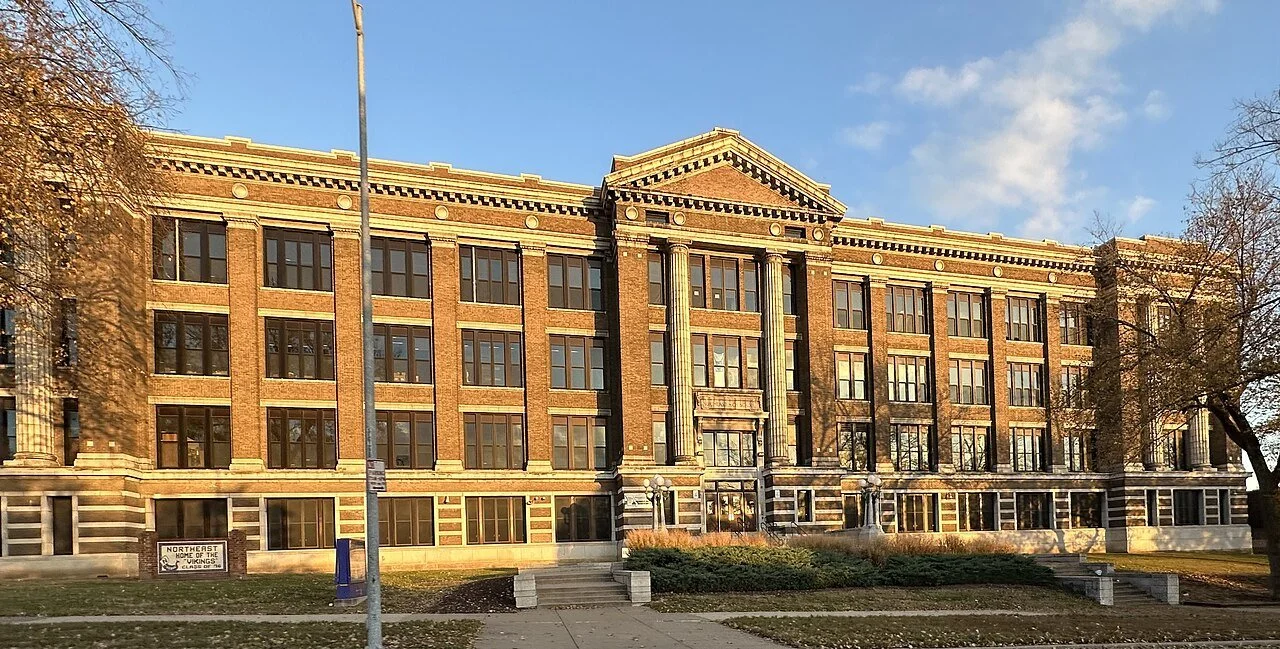
photo courtesy Smuckola, Wikimedia Commons